

What Is an OCT Eye Test? Why Doctors Recommend It
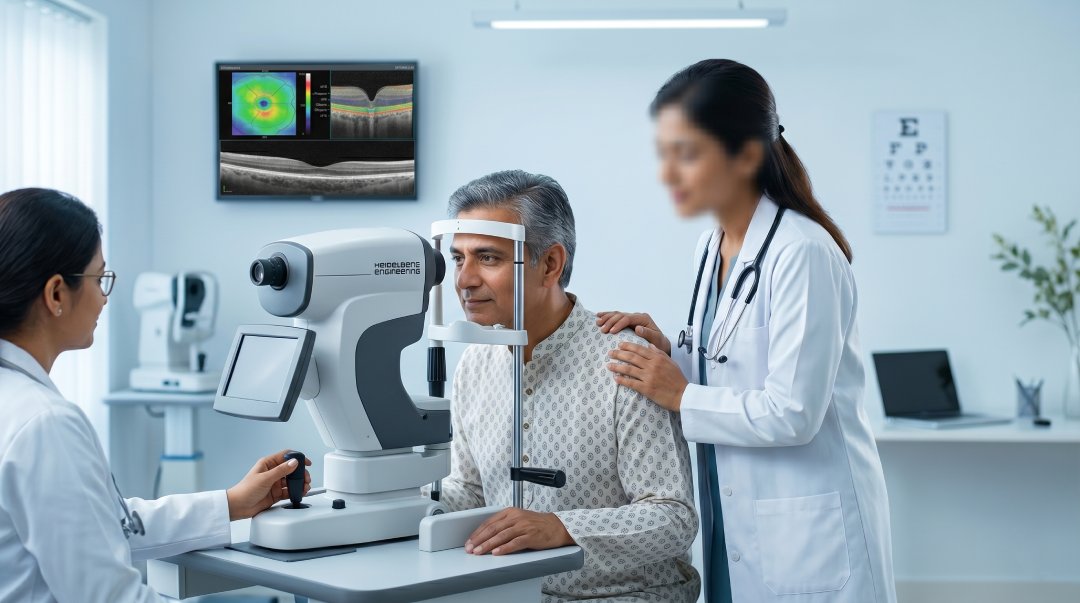
How Does an OCT Eye Test Work?
If your eye doctor has recommended an OCT eye test, you may be wondering what it is, whether it is painful, and why it is needed. The good news is that an OCT eye test is a non-invasive imaging test that helps eye specialists look at the retina and optic nerve in very fine detail. It uses light waves to create cross-sectional pictures of the back of the eye.
In simple words, an OCT scan works a little like an eye “scan” that helps the doctor see layers inside the retina that cannot be assessed as clearly with a routine eye examination alone. This can help detect, confirm, or monitor conditions affecting the retina and optic nerve.
What does OCT stand for?
OCT stands for Optical Coherence Tomography. It is a commonly used eye imaging test that creates detailed images of the retina, including the macula, and in many cases helps assess the optic nerve as well.
The retina is the light-sensitive tissue at the back of the eye, and the macula is the central part of the retina responsible for sharp, detailed vision. Because OCT gives very detailed layer-by-layer images, it is especially useful when doctors need to understand why vision is blurred, distorted, or changing.
Why is an OCT eye test done?
An OCT eye test is done to help diagnose and monitor several important eye conditions. According to the National Eye Institute, OCT is commonly used in the evaluation of age-related macular degeneration, and other ophthalmology sources note that it is also widely used for glaucoma, diabetic retinopathy, and other retinal problems.
Doctors may recommend an OCT eye test if you have:
blurred vision, reduced central vision, distorted vision, diabetic eye disease, suspected glaucoma, retinal swelling, or age-related macular changes. It is also commonly used to monitor how stable or active a retinal condition is over time.
What conditions can OCT help detect?
An OCT scan is especially valuable because it can show subtle structural changes in the retina. Sources from NIH and Research to Prevent Blindness explain that OCT is used to help detect or monitor:
- age-related macular degeneration
- diabetic retinopathy
- diabetic macular edema
- glaucoma-related optic nerve damage
- macular hole
- macular pucker / epiretinal membrane
- retinal swelling and fluid buildup
This is why the test is so important in modern eye care. In many cases, it helps detect changes early, follow disease progression, and guide treatment decisions more accurately.
How is an OCT eye test done?
An OCT eye test is usually quick and straightforward. You sit in front of the machine, place your chin on a support, and look at a target while the machine scans your eye. The test is non-contact in most routine cases, meaning the machine usually does not touch your eye.
Sometimes, the doctor may use eye drops to dilate your pupils so clearer images can be captured, depending on the eye problem being investigated and the quality of the view.
Is an OCT eye test painful?
No — an OCT eye test is generally considered painless and non-invasive. It does not involve injections, cutting, or surgery. For most patients, the main experience is simply sitting still and looking at a target for a short time while the machine captures images.
If dilating drops are used, you may notice temporary blurring of near vision or light sensitivity afterward, but the OCT scan itself is not usually uncomfortable.
Why might your doctor suggest OCT even if your eye looks normal from outside?
This is a common question from patients. Many retinal and optic nerve changes happen inside the eye and are not visible from the outside. An OCT scan helps detect internal structural changes that can be missed without detailed imaging.
That is one reason OCT is often recommended for people with diabetes, glaucoma risk, unexplained blurry vision, or suspected macular disease. The goal is not just to diagnose advanced disease, but also to identify important changes as early as possible.
Does OCT replace a full eye examination?
No. An OCT eye test is a very useful diagnostic tool, but it does not replace a full eye examination. Instead, it adds detailed imaging information that helps the doctor understand what is happening inside the eye more clearly.
That means your doctor may still recommend visual acuity testing, eye pressure checks, retinal examination, or other diagnostic tests depending on your symptoms and eye condition.
When should you ask about an OCT eye test?
You should speak to an eye specialist about an OCT eye test if you have:
blurred or distorted central vision, diabetes-related eye concerns, suspected glaucoma, sudden changes in vision, or if your doctor wants to monitor a retinal condition over time. These are all common reasons OCT is used in practice.
If you are a patient searching for clear answers before an eye test, it helps to remember that OCT is usually recommended because the doctor wants a more detailed look, not because something severe is already confirmed. It is often used to rule out problems, confirm a diagnosis, or track progress safely and accurately.
Conclusion
So, what is an OCT eye test and why is it done? It is a painless, non-invasive eye imaging test that uses light waves to create highly detailed images of the retina and sometimes the optic nerve. Doctors use it to detect and monitor conditions such as macular degeneration, diabetic eye disease, retinal swelling, and glaucoma-related damage.
For an eye hospital website, this blog should stay informational and supportive. Then your service page can carry the stronger local booking intent, which is the safest way to avoid keyword cannibalization while still building relevance around OCT-related searches.