

Blurred Vision Explained: Causes, Warning Signs, and Next Steps
Blurred Vision: Common Causes and When to Worry
Have you ever rubbed your eyes, blinked a few times, and still felt like the world looked a little out of focus? Most of us have. Blurred vision is one of the most common reasons people walk into an eye clinic — and most of the time, it isn't serious. But sometimes, it's your eyes quietly asking for help.
This guide will walk you through what blurred vision actually means, the most common reasons behind it, when you can wait it out, and when you should book a visit with an eye specialist the same day.
What Does
Blurred vision is when objects look hazy, fuzzy, or out of focus. It can affect one eye or both. It can creep in slowly over months, or hit you suddenly within minutes. The way it shows up tells your doctor a lot about what's causing it.
You might notice:
- Words on your phone screen looking smudged
- Difficulty reading road signs that used to be clear
- Faces appearing soft around the edges
- Needing to squint to bring things into focus
- Halos or glare around lights at night
- Vision that clears for a moment after blinking, then blurs again
Blurred vision is a symptom, not a diagnosis. The cause matters far more than the symptom itself — and that's where a proper eye exam comes in.
Common Causes of Blurred Vision
Let's go through the reasons we see most often in our clinic, starting from the simplest.
1. Refractive Errors (the most common reason by far)
If your blur has been creeping in slowly and isn't painful, this is usually the answer. Refractive errors happen when the shape of your eye doesn't bend light onto your retina the way it should. The four main types are:
- Myopia (nearsightedness) — distant things look blurry
- Hyperopia (farsightedness) — close things look blurry
- Astigmatism — both near and far feel slightly off, sometimes with eye strain
- Presbyopia — the natural age-related blur up close, usually starting around age 40
The fix is usually simple. A pair of glasses or contact lenses can correct most refractive errors. If you'd rather not depend on glasses, laser eye treatment can correct many of these problems permanently after a thorough evaluation.
2. Cataracts
A cataract is when the natural lens inside your eye becomes cloudy — almost like looking through a frosted window or a smudged camera lens. Many patients describe their world looking dimmer, less colourful, or "foggy."
Cataracts are most common after age 50, but can show up earlier in people with diabetes, long-term steroid use, or a history of eye injury. If your night driving has become uncomfortable because of glare, that's often an early clue.
The good news is that cataract surgery is one of the safest and most effective procedures in modern medicine. Cataract evaluation and treatment planning are part of our clinical eye care services in Cooch Behar.
3. Dry Eyes and Ocular Surface Problems
If your vision blurs and clears every time you blink, dry eye might be the culprit. Long screen hours, air conditioning, contact lens overuse, dusty environments, and aging all reduce tear quality.
Mild cases respond well to lubricating drops and screen breaks. Persistent or worsening symptoms — burning, redness, sensitivity to light, or vision that gets worse through the day — need proper ocular surface care.
4. Diabetes-Related Eye Changes
Uncontrolled blood sugar can damage the tiny blood vessels in your retina, a condition called diabetic retinopathy. Early on, you might just notice fluctuating vision — clearer some days, blurry others. Later signs include dark floaters, patches of missing vision, or sudden vision loss.
If you have diabetes, please don't wait for symptoms to appear. We've written a detailed guide on why diabetes patients should never skip an eye exam — it's worth ten minutes of your time.
5. Glaucoma
Glaucoma damages the optic nerve, often silently, before you ever notice anything. By the time blurred or tunnel vision appears, significant damage may already be done. That's why glaucoma is sometimes called the "silent thief of sight."
If you're over 40, have a family history, or live with diabetes or high blood pressure, please read our full guide on early glaucoma symptoms you should never ignore and book a pressure check.
6. Eye Injury or Trauma
A scratch on the cornea, a chemical splash, dust trapped under the eyelid, or a blow to the eye can all cause sudden blurry vision. Even minor-feeling injuries can hide deeper damage.
Eye trauma is always urgent. Don't rinse with random liquids, don't rub, don't wait it out. Our eye trauma care is built for exactly these moments.
7. Migraine With Visual Aura
Some migraines start with visual disturbances — flickering lights, zigzag patterns, shimmering edges, or a soft blur — about 20–60 minutes before the headache itself. These usually fade on their own. If they're new, frequent, or different from your usual pattern, get them checked.
8. Medication Side Effects
Certain medications — antihistamines, antidepressants, blood pressure medications, some antibiotics, and steroid eye drops used long-term — list blurred vision as a side effect. If your blur began shortly after a new prescription, mention it to both your physician and your eye doctor before changing anything yourself.
9. Pregnancy and Hormonal Changes
Hormones can change the shape of your cornea and the quality of your tears, leading to temporary blur during pregnancy. It usually settles within a few weeks of delivery. Sudden severe blur during pregnancy, however, can signal high blood pressure issues and needs urgent evaluation.
10. Other Less Common Causes
These are worth knowing, even if they're rarer:
- High blood pressure damaging retinal vessels
- Optic neuritis (inflammation of the optic nerve)
- Uveitis — inflammation inside the eye
- Stroke or transient ischemic attack (TIA) — a medical emergency
- Brain-related conditions affecting the visual pathway
Most of these come with other symptoms alongside the blur, which is one of the things we look for during a complete eye exam.
When Should You Worry? (Red Flags You Shouldn't Ignore)
Most blur isn't dangerous. But please get checked the same day — or head to an emergency service — if you experience any of these:
- Sudden blurred vision in one or both eyes
- Blur with eye pain or a severe headache
- Blur with weakness, numbness, slurred speech, or face drooping (this could be a stroke — call emergency immediately)
- Flashes of light, a shower of new floaters, or a curtain falling across your vision (possible retinal detachment)
- Blur after any blow or injury to the eye
- Halos around lights with a red, painful eye (could be acute angle-closure glaucoma)
- Loss of vision in part of your visual field
- Blur with double vision or trouble moving the eye
If you're in or near Cooch Behar and any of these apply, please call our emergency line at 99320 63507 without waiting for office hours.
How We Diagnose the Cause of Your Blurred Vision?
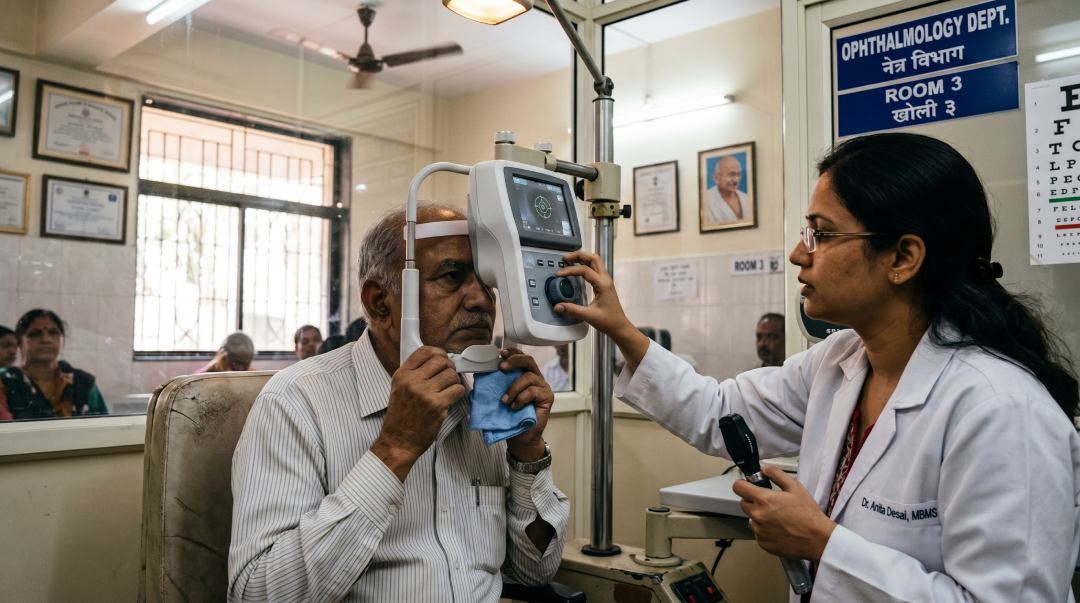
A complete eye evaluation is far more than a vision chart. When you come in, we typically perform:
- Visual acuity test to measure how clearly you see
- Refraction to check whether glasses would help
- Slit-lamp examination to inspect the front of your eye in detail
- Tonometry to measure eye pressure
- Dilated retinal examination to look at the retina and optic nerve
- Advanced imaging when indicated, including OCT, gonioscopy, and keratometry
These tools help us pinpoint exactly where the problem sits — on the surface, inside the lens, in the retina, or along the optic nerve. The right diagnosis makes the right treatment possible.
Treatment Options for Blurred Vision
Treatment depends entirely on the cause. Here's how the most common cases are managed:
- Glasses or contact lenses for refractive errors
- Laser vision correction for those who want a permanent fix
- Cataract surgery when cataracts begin affecting daily life
- Lubricating drops, lifestyle changes, and ocular surface care for dry eye
- YAG laser for posterior capsule opacification, a common late complication after cataract surgery
- Retinal laser for diabetic retinopathy and certain retinal tears
- Eye-pressure-lowering treatment for glaucoma
- Anti-inflammatory care for uveitis
- Urgent specialist intervention for trauma, retinal detachment, or stroke-related vision loss
Simple Habits That Protect Your Vision
A few small daily choices go a long way:
- Follow the 20-20-20 rule — every 20 minutes of screen time, look at something 20 feet away for 20 seconds.
- Wear UV-protective sunglasses outdoors, even on cloudy days.
- Keep your blood sugar and blood pressure under control.
- Don't sleep in contact lenses, and never wear them past their replacement schedule.
- Stay hydrated — your tears are mostly water.
- Wash your hands before touching your eyes.
- Get a routine eye checkup at least once every one to two years — more often if you're over 40, have diabetes, or have a family history of glaucoma.
Sources & Further Reading
This article references information from established eye health and medical authorities:
- American Academy of Ophthalmology (AAO). Blurriness — Symptoms and Eye Conditions. aao.org
- Cleveland Clinic. Blurred Vision: Causes, Treatments & When to See a Doctor. clevelandclinic.org
- Harvard Health Publishing. What Could Be Causing Your Blurry Vision? health.harvard.edu
- American Optometric Association (AOA). Astigmatism. aoa.org
- National Eye Institute (NEI), NIH. Refractive Errors. nei.nih.gov
- National Eye Institute (NEI), NIH. Cataracts. nei.nih.gov
- National Eye Institute (NEI), NIH. Diabetic Retinopathy. nei.nih.gov
- National Eye Institute (NEI), NIH. Glaucoma. nei.nih.gov
- Mayo Clinic. Blurred Vision — Symptoms & Causes. mayoclinic.org
- World Health Organization (WHO). World Report on Vision (2019). who.int
Last reviewed: April 2026 by the medical team at Dr. D.B. Sarkar Eye Hospital.
Medical Disclaimer
The information shared in this blog is for general awareness and educational purposes only. It is not intended to replace professional medical advice, diagnosis, or treatment from a qualified eye care specialist. Every eye is different, and so is every cause of blurred vision — what's true for one patient may not apply to another.
If you are experiencing blurred vision, especially if it came on suddenly or is accompanied by pain, headache, flashes, floaters, or any neurological symptoms, please consult a qualified ophthalmologist immediately. Do not delay seeking care, and do not stop or change any prescribed medication based on the information in this article.
While we make every effort to keep this content accurate and up to date, medical understanding evolves. Dr. D.B. Sarkar Eye Hospital and its team accept no liability for actions taken solely on the basis of this article. For personalised guidance, please book a consultation with our eye specialists in Cooch Behar.
In case of an eye emergency, call 99320 63507 immediately.